What You Should Remember
Check every big career choice against your top three most important personal beliefs. Make sure your day-to-day work helps you reach your life goals in the long run.
Stop spending all your time doing the actual technical work yourself. Instead, shift your energy to leading projects that fix the exact problems you care about the most.
Notice which management tasks use up all your energy. Give those tasks to other people so you have more time for the work that naturally fits your best skills.
Judge how successful your career is by how closely your daily schedule matches your personal life mission, not just by your job title or how much money you make.
Making Your Career Match Your Values
Most people think career fit is like making a shopping list. They write down things they like, like being creative or helping people, and then they just wait for a company to give them a job that feels meaningful. This is the trap of just having a "Passion Checklist," and it usually leads to you not being taken seriously in your career. If you wait for the HR office to hand you your purpose, you aren't leading—you are just buying things. This waiting game often results in the "Goldilocks Problem," where you jump from one job that isn't quite right to the next, until your resume looks like a warning sign to good hiring managers.
If you are in a top leadership role, finding alignment isn’t mostly about your happiness—it’s about how fast the company can use its people well. A leader who isn’t aligned slows down the whole business, costing real money. According to Gallup’s 2025 State of the Global Workforce report, disengaged employees cost the world economy an estimated $438 billion in lost productivity every year—which makes misaligned leadership an expensive problem to ignore. Getting this wrong doesn’t just cost you a job; it hurts your influence and limits how much money you can ever make. If you can’t show that your personal motivation helps the company achieve its goals, people will see you as someone "likely to leave." You become just another replaceable piece in the company machine, ready to be swapped out when your excitement finally wears off.
To break free from this cycle, you need to stop asking for permission to be who you are. Instead, you must build a System for Exchanging Value. The best leaders don't look for a job that "fits" their values; they find a major business problem that needs those exact values to be solved. Stop asking if a company shares your interests. Start asking which of your personal strengths you can use like a weapon to solve a huge, expensive problem for the CEO. When you present your personal drive as the solution to a major company pain point, you stop being just another person they hired and become someone essential to their success. A LinkedIn survey of nearly 10,000 professionals found that 87% of US workers actively seek employers whose values match their own—even in a tough job market. The demand for alignment is there. The question is whether you know how to supply it.
What Is Career-Values Alignment?
Career-values alignment is the practice of matching your work to your core beliefs. Instead of searching for a job that merely feels comfortable, you identify the business problems your values are built to solve—making yourself not just a good hire, but a necessary one.
Most career advice treats alignment as a search problem: find the company whose culture matches your personality. The real approach treats it as a positioning problem: identify which of your values eliminates a pain point expensive enough for a business to pay to fix. Deloitte research found that purpose-driven companies experience 40% higher levels of workforce retention than their peers—which means the organizations most worth joining are already building around this logic. Your job is to show them you fit it. For a deeper starting point, writing a personal mission statement for your career is often the clearest first step toward this kind of clarity.
A Step-by-Step Plan for Getting Aligned
Don't look for a company that will "make you happy." Look for a company that is "failing in a way you love to fix." You need to move from a list of things you like to a list of what drives you to work harder than anyone else. Real connection happens when your personal strong feeling acts as a guarantee that you will keep performing when a business problem gets serious.
Make a "Weapon Map." On one side, list three things you are obsessed with (like "Being Totally Honest"). On the other side, list three company "Pain Points" those beliefs fix (like "High staff turnover because no one trusts management"). Connect your values to actual money issues so you become someone they absolutely must hire, not just someone nice to have.
"I’m not trying to find a job that just fits my interests. I have seen that my main focus on [Your Value] is exactly what's needed to fix [Specific Company Problem]. Because this drives me personally, I can keep working hard on this issue even when it becomes difficult for others."
Recruiters are scared of candidates who sound just "passionate" because passion often seems temporary. We want someone who sees a boring operational mess as a personal mission they are uniquely built to handle, not just someone who likes the idea of the job.
In the interview, you must deal with the fear that you might be hard to manage by showing how your values make you more reliable, not harder to work with. Present your passions as the reason you won't give up when times get tough. You are selling "fast results through reliable people"—the idea that because you are aligned, you need less watching and get things done quicker.
The "Show Your Weakness as Strength." Take a value that might make you seem "different" or "hard to control" and explain how it actually prevents "Slowdowns." For example, if you value "Total Freedom," explain how that lets you finish projects without needing constant check-ins, saving the manager 10 hours of meetings every week.
"Most people find [Task] boring or tiring. But because [Your Value] is who I am, I actually feel energized by that work. This means your team gets the same high-quality work all the time without the risk of me burning out or needing constant management."
Company systems are built to hire "Interchangeable Parts." To win, you must prove that firing you would cost them more in "lost progress" than the cost of keeping you. You want to be seen as a strategic partner, not just another number on the payroll.
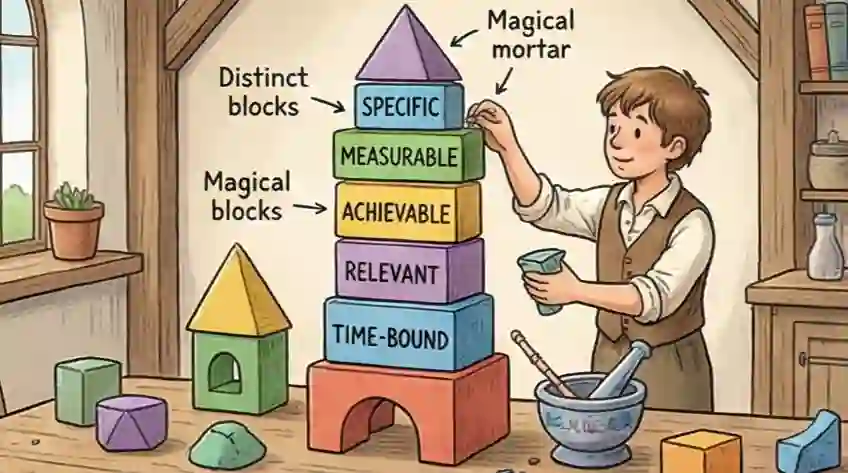
Once you start the job, you must make your alignment a permanent, official part of the company by linking your personal values to clear business goals (KPIs). If your values lead to real profits, the company will happily let you keep working in a way that makes you happy. Gallup research shows that employees with a strong sense of purpose at work are 5.6 times as likely to be engaged as those without—a number worth dropping into your 90-day review. Pairing your values with SMART career goals makes that measurement concrete and defensible.
The "First 90 Days Check-in." At your first review, don't just talk about how much you "like" the workplace. Instead, show a report proving how your specific "Value-Based Way of Working" led to a measurable win (e.g., "Because I focus on 'Giving Direct Feedback,' we cut down the time needed for project revisions by 20%").
"In my first three months, I used my focus on [Your Value] in [Project]. This resulted in [X%] better results. I want to make this a standard way of working for our next goals to keep this speed up without spending more money."
Managers worry about the "Passion Wearing Off"—the moment a new employee gets bored and leaves. By showing that your core beliefs create a "Return on Keeping You" (you stay longer and work harder because the job fuels your "why"), you become the most valuable person there.
How Cruit Helps Your Alignment Plan
Step 1 Help
Career Guidance ToolWe use deep questioning to help you find your values and connect them to what businesses truly need, turning you into a candidate they must hire.
Step 2 Help
Interview PracticePractice how to sell your "Resilience Pitch" by preparing stories that use the STAR method to show your value.
Step 3 Help
Daily TrackingKeep track of your daily successes so you can prove your value sticks around. Our AI Coach summarizes these to help you in your 90-Day Check-in.
Common Questions: The Value Exchange System
What does it mean to align career goals with your values?
Career-values alignment means matching your work to what you find genuinely meaningful. You identify your core beliefs, then seek out companies facing problems those beliefs are built to solve. The goal isn’t a job that feels comfortable—it’s work that keeps you motivated when challenges get serious and makes you harder to replace.
The practical test: If you’d keep doing this work even when it got difficult, your values and your role are aligned. If you need external motivation to keep going, they aren’t.
Does sharing your personal values in an interview sound arrogant?
Don’t confuse "pushy" with "clear." Being arrogant is saying you’re great without proof. Being authoritative is showing exactly how your specific drive fixes their immediate problem. When you talk about passions without connecting them to business needs, you sound like someone who wants a patron for a hobby. When you say, "Because I’m obsessed with transparency, I can stop your current project delays right now," you aren’t being pushy—you are offering a solution.
What to do: Find the company’s biggest headache (too many employees quitting, slow product releases, loss of customer trust). Connect your core value directly to the fix. If they think that’s too much, they’re looking for someone to fill a chair. Don’t take that job.
How do you find a company’s biggest problems without inside data?
You don’t need the CEO’s files to see where a company is losing money. Every job posting is basically the company admitting a failure. Hiring a Senior Project Manager means their current projects are disorganized or late. Hiring for Customer Success means clients are leaving.
What to do: Read job descriptions as a list of existing fires, not a list of chores. Look up normal failure rates for that industry. If most companies in their field lose 20% of clients yearly, that’s your $1M problem. Pitch yourself as the person whose dedication to customer loyalty will cut that loss in half.
What if a recruiter ignores your values pitch entirely?
Recruiters are trained to hire safe candidates—people who fit the existing machine. Their job is to reduce risk, not find the top 1%. If you let yourself be judged only by a checklist, you’ve already accepted being a replaceable part.
What to do: Give the recruiter the bare minimum they need to move you forward, then focus on getting in front of the hiring manager—the person who actually feels the pain. Once you’re talking to the manager, stop talking about duties and start talking about results. A manager always picks the candidate who promises to make their work life easier over a recruiter’s safe choice.
Can you align your career with values if you need a paycheck first?
Yes. Start by identifying your top three values and mapping them to skills you already have. Even in an imperfect role, you can negotiate projects and responsibilities that put those values to work. Over time, that track record becomes your entry point to roles with better alignment—and stronger leverage in salary conversations.
The key shift: Stop waiting for the perfect job to appear. Start performing in a values-driven way within the current one. That performance record is what gives you negotiating power when you’re ready to move.
Take Charge of Your Worth: The Expert Shift
Real companies don't need employees who are just thankful to be there; they need key assets who understand the serious value they bring to the table.
If you go back to the AMATEUR MISTAKE of waiting for a company to approve of your passions, you will always be just a replaceable cost on their budget sheet.
By making the EXPERT SHIFT, you change from just applying for jobs to becoming a strategic partner who fixes major problems using your personal drive.
Top leaders respect people who negotiate with confidence because it proves you know how to deliver real success.